
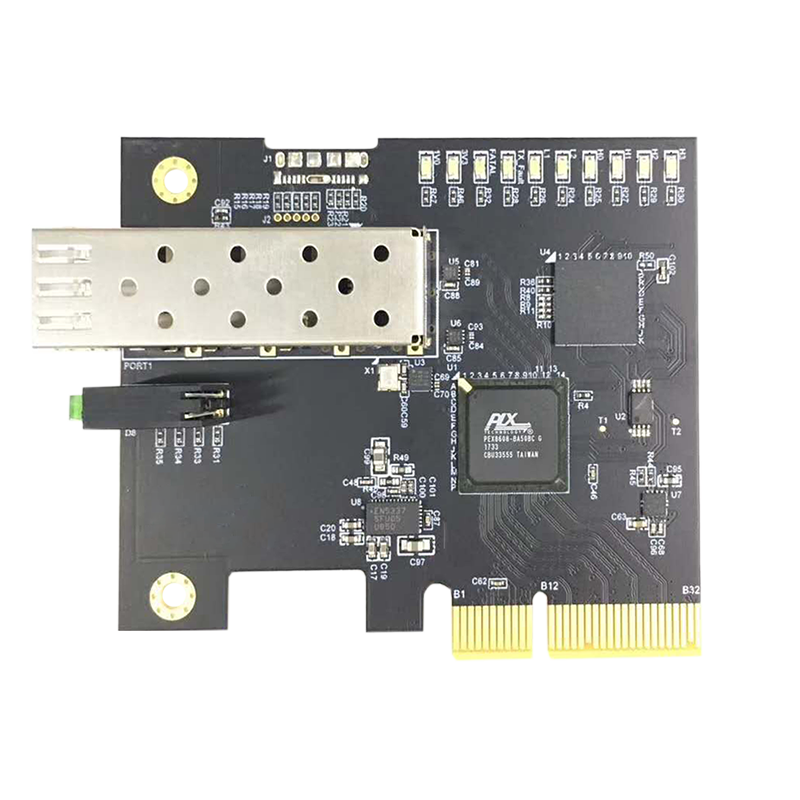
In the rapidly evolving electronics industry, the production of Printed Circuit Boards (PCBs) remains a critical step for ensuring device quality, reliability, and performance. Recent insights into the PCB manufacturing process underscore the complexity, precision, and stringent quality control essential for producing high-standard electronic component/'>components. As the backbone of almost all electronic devices, PCBs require meticulous attention from design to final inspection, integrating advanced technologies and strict manufacturing protocols.
The PCB production process typically involves several key stages: substrate preparation, pattern creation, drilling, plating, etching, solder mask application, silkscreen printing, and final testing. Each of these steps demands accuracy and careful control to avoid defects that could compromise the functionality of the finished electronic products.
**Substrate Preparation and Lamination**
The process begins with selecting a suitable substrate, often a fiberglass-reinforced epoxy laminate, which forms the foundation of the PCB. The quality of the substrate affects the overall durability and electrical performance. The board/'>board undergoes cleaning, drying, and lamination with copper foil layers using heat and pressure, ensuring a solid base ready for circuit patterning.
**Circuit Patterning and Imaging**
Creating intricate circuit patterns is a pivotal step. Photolithography and imaging technologies transfer the circuit design onto the copper-clad board. A photoresist layer applied over the copper is exposed to ultraviolet light through a photomask, hardening exposed regions. The unhardened photoresist is then removed, revealing the copper areas to be etched away.
**Drilling and Plating**
Accurate drilling of holes and vias follows, which are essential for component mounting and electrical connections between layers. Highly precise drilling equipment is employed to achieve the necessary tolerances. Subsequent plating deposits a thin layer of copper inside the holes, establishing conductive pathways vital for multilayer PCBs.
**Etching and Surface Finishing**
Chemical etching removes the unwanted copper, leaving behind the desired circuit patterns. Advanced etching solutions and process controls ensure sharp, clean lines without undercutting. Following etching, surface finishes such as HASL (Hot Air Solder Leveling) or ENIG (Electroless Nickel Immersion Gold) are applied to protect the copper and facilitate soldering.
**Solder Mask and Silkscreen**
The solder mask, usually a green epoxy layer, is applied to insulate and protect the board while exposing pads for component soldering. A silkscreen layer is printed on top, providing markings, company logos, and component labels, essential for assembly and troubleshooting.
**Inspection and Testing**
Throughout production, inspection processes are critical to maintain quality standards. Automated Optical Inspection (AOI), X-ray inspection, electrical testing, and functional checks detect defects such as shorts, opens, or misalignments. Rigorous quality control prevents faulty boards from progressing to the assembly stage.
---
**NEW CHIP INTERNATIONAL LIMITED: Excellence in Electronic Component Distribution and Quality Assurance**
In parallel with advancements in PCB manufacturing, professional agents and distributors specializing in electronic components play a vital role in the supply chain. NEW CHIP INTERNATIONAL LIMITED, a wholly owned subsidiary of H.C.C., stands out as a leading expert in electronic components distribution, PCBA services, and ODM solutions.
With a comprehensive business scope covering PCBA, Original Design Manufacturing, and electronic component sourcing, NEW CHIP INTERNATIONAL LIMITED brings substantial expertise to the industry. The company’s focus on in-depth knowledge of component parameters and materials sets it apart in guaranteeing product authenticity and performance.
A key strength of NEW CHIP INTERNATIONAL LIMITED lies in its assembly of professional industry engineers and inspection specialists equipped with state-of-the-art testing instruments. This ensures that every component, whether individual parts or assembled PCBA units, meets stringent quality criteria before delivery.
The company places paramount importance on authentic sourcing, mitigating risks related to counterfeit components — a major concern in today’s global electronics market. By leveraging advanced inspection technologies and industry expertise, NEW CHIP INTERNATIONAL LIMITED supports manufacturers in obtaining genuine materials, reducing production errors, and maintaining reliability throughout the product lifecycle.
---
**Integrating Superior PCB Manufacturing with High-Quality Component Supply**
The synergy between advanced PCB production methodologies and reliable electronic component distribution is indispensable to the electronics manufacturing industry. Companies like NEW CHIP INTERNATIONAL LIMITED exemplify the critical link in this chain, providing high-quality, verified components and comprehensive solutions, including PCBA and ODM services.
As the market increasingly demands shorter product development cycles, enhanced product reliability, and cost-efficient manufacturing, integrating superior PCB fabrication with trusted component supply is essential. This integration ensures manufacturers can confidently proceed from design and prototype stages to mass production, relying on consistent quality standards across the board and components.
---
**Conclusion**
The modern PCB production process is a testament to technological progress in electronics manufacturing, involving an array of sophisticated steps designed to produce reliable and performance-optimized printed circuit boards. Concurrently, specialized distributors and agents like NEW CHIP INTERNATIONAL LIMITED play a pivotal role in facilitating the availability of authentic, high-quality electronic components and comprehensive assembly services.
Together, advances in PCB manufacturing and the assurance of genuine component supply drive innovation, quality, and trust within the electronics industry, ultimately benefiting manufacturers and end-users alike. As electronics continue to evolve and integrate into every aspect of daily life, maintaining high standards in both PCB production and component sourcing remains a cornerstone of industry success.